
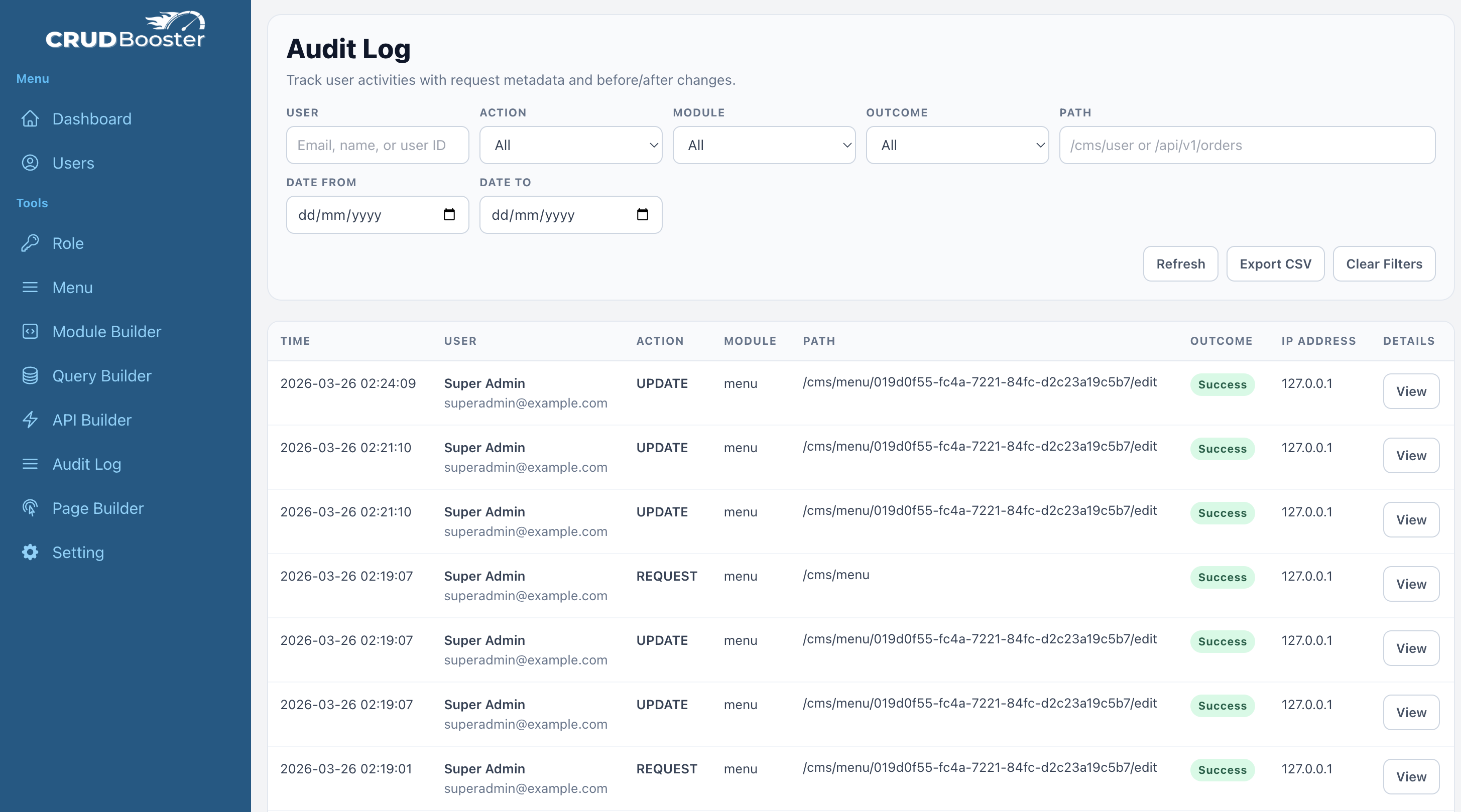
As your application grows and more users interact with your system, questions like who changed this data, when did it happen, and which fields were updated become increasingly important. That is where the Audit Log feature in CRUDBooster becomes highly valuable.
Availability: Audit Log is available starting in CRUDBooster v7.18.0.
Audit Log is a built-in CRUDBooster module designed to capture important activity in a structured way. It records CRUD events such as create, update, and delete, plus authentication events such as login, logout, and failed login attempts.
In short, Audit Log gives your team a practical audit trail without requiring a custom logging system.
What Does Audit Log Record?
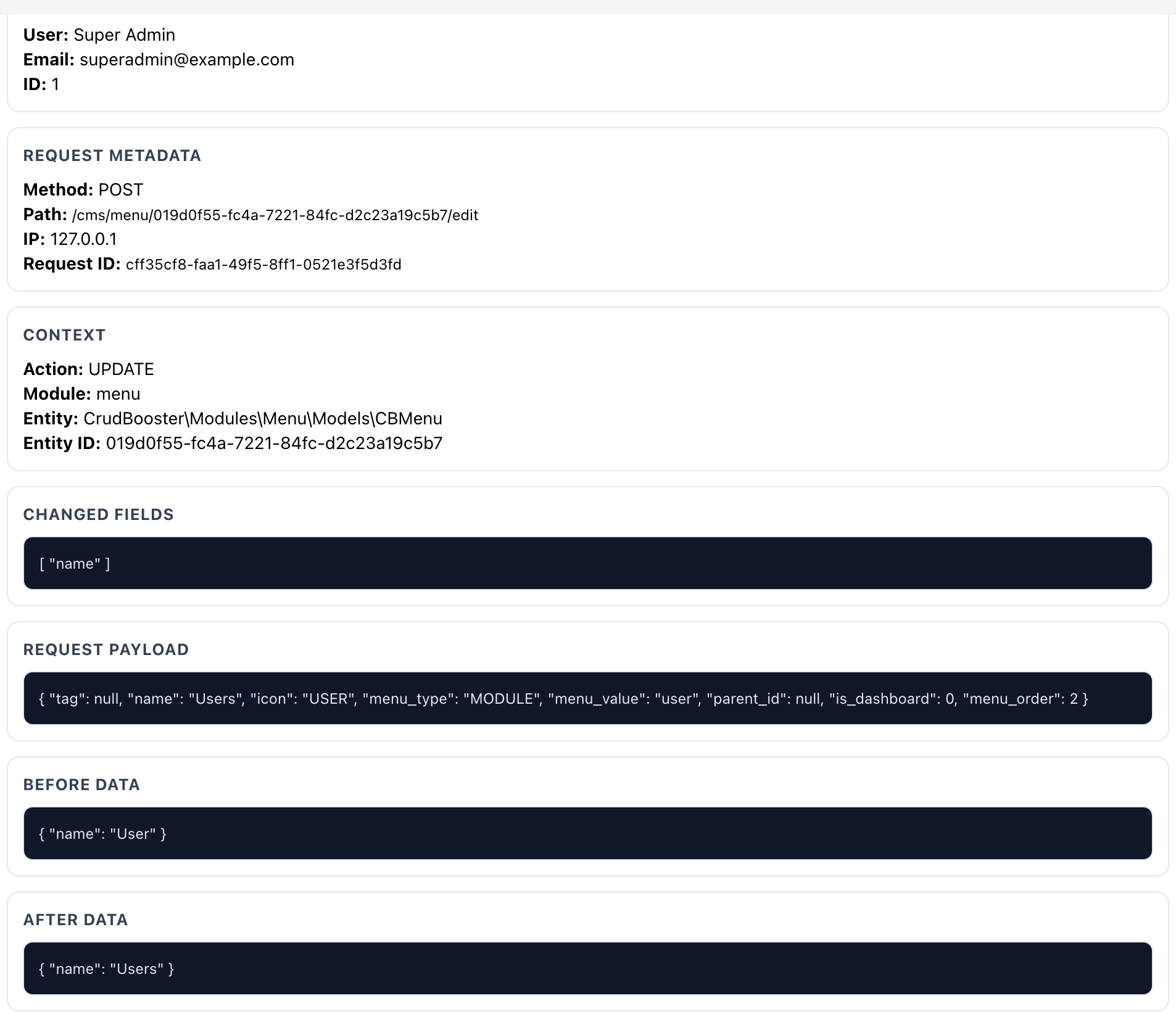
- Actor identity (user ID, name, and email)
- Action type (create, update, delete, login, logout, failed login)
- Context information (module, entity type, and entity ID)
- Request metadata (HTTP method, path, IP address, user agent, request ID)
- Before/after payload snapshots and exact changed fields
For update actions, CRUDBooster stores only fields that actually changed, so review is easier and cleaner.
Clearer Visibility into Data Changes
Audit Log provides clear before and after values. For update events, changes with no real diff are skipped to avoid empty or duplicate records.
Sensitive Data Masking by Default
CRUDBooster applies strict masking to sensitive fields such as passwords, tokens, authorization headers, API keys, and secrets, including nested objects and arrays.
Payload size is also capped to keep storage controlled.
Read-Only UI to Preserve Audit Integrity
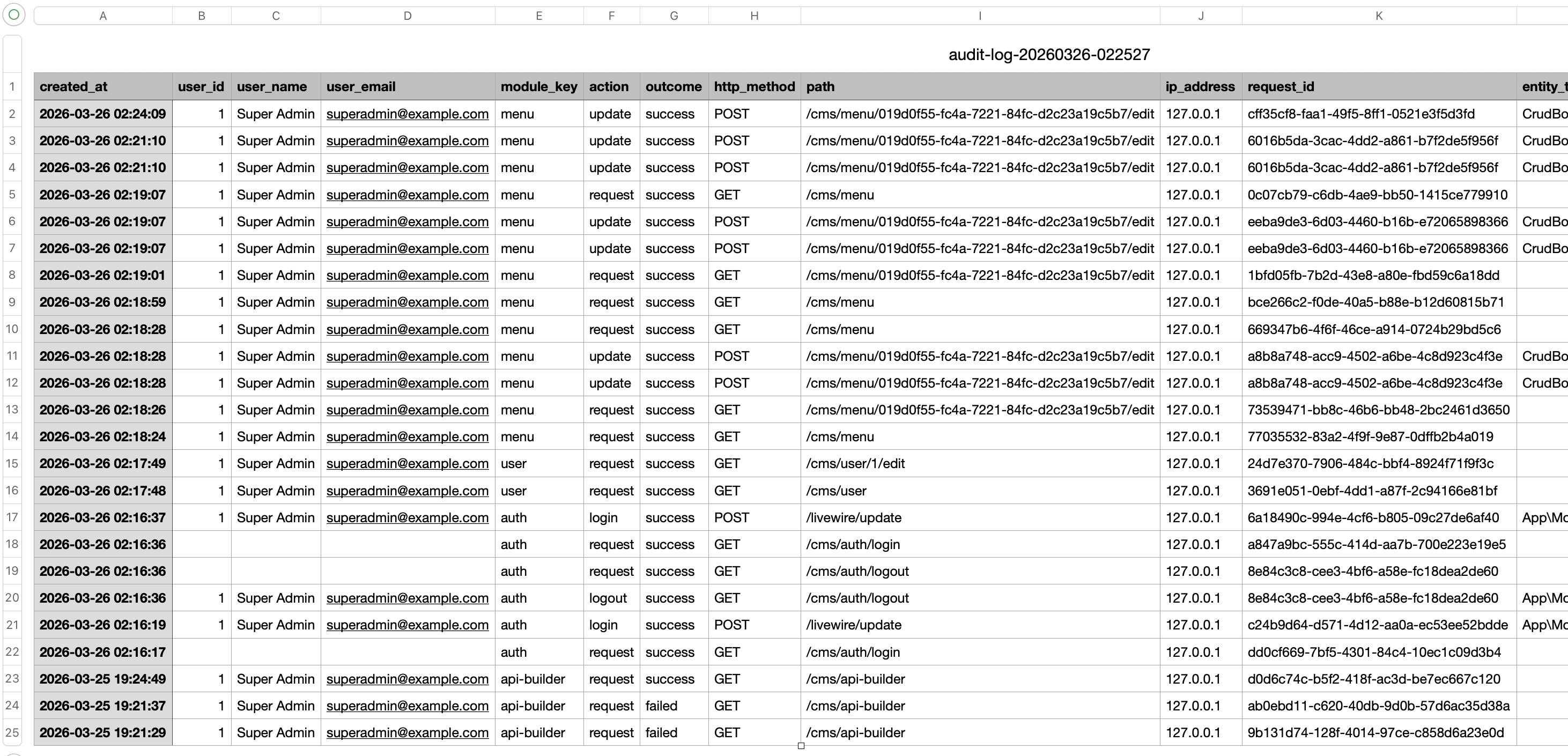
Audit Log is provided as a read-only interface to preserve integrity. You can filter by user, action, module, outcome, path, and date range, open detail entries, and export logs for analysis.
Conclusion
If you need stronger visibility into user activity and data changes, Audit Log is one of the most practical built-in features in CRUDBooster.
Loading...
Just now